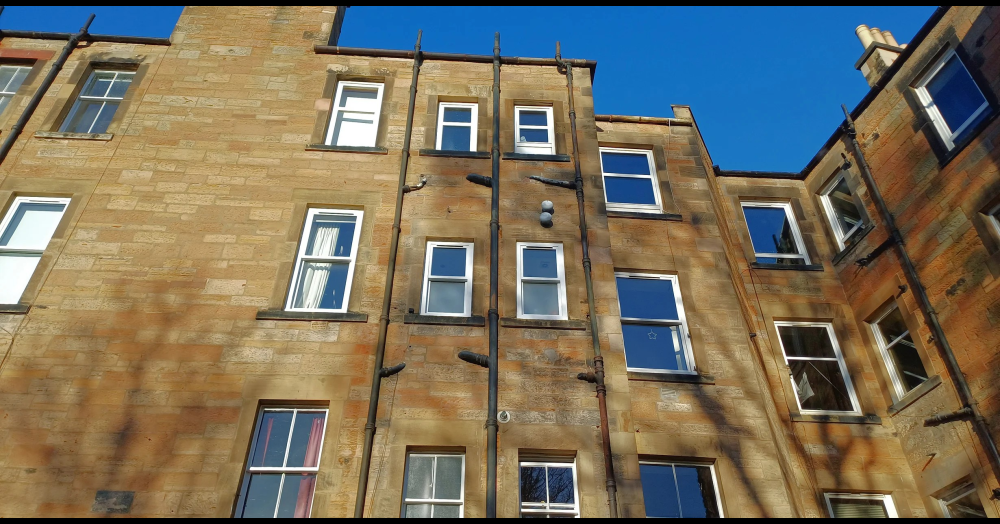
Tenement Sandstone - can we keep these 300-million year-old blocks going a wee bit longer?
Your tenement’s stone may be over 300 million years old — but its condition today depends on how it’s maintained. For owners, understanding your building’s sandstone can help prevent costly, avoidable repairs.
Walk through many Scottish cities and you’ll notice tenements ranging from pale blonde to deep red. While this reflects where the stone was sourced and when buildings were constructed, for today’s owners the real question is simpler: how does it affect maintenance?
Blonde vs red — what’s the difference?
Scottish tenements were built using locally quarried sandstone, but not all sandstone behaves the same.
Blonde sandstone, typically cream, buff or grey, was often sourced close to or in the city, and was used in earlier 19th-century buildings. Red sandstone, richer in colour due to iron content, became more common later as railways made it easier to transport materials from further afield.
In general terms, some blonde stones can be slightly more porous, while red sandstone is often denser. But both materials are durable when properly maintained — and neither is maintenance-free.
What really affects maintenance
For most owners, performance matters more than appearance. The condition of stonework is typically driven by:
- Exposure to wind-driven rain
- The quality of previous repairs
- Use of inappropriate cement mortars
- Delays in shared maintenance
In tenements, these issues are often compounded by the need for agreement between multiple owners — meaning small defects can escalate if action is delayed.
Know your stone, plan your repairs
Blonde sandstone : Usually earlier buildings - common in older 19th-century tenements using locally quarried stone.
Red sandstone: more common from the late Victorian period as rail transport expanded.
What this means for owners
Understanding your building’s stone helps you make better repair decisions. Using the wrong materials — particularly hard cement mortars — can trap moisture and accelerate decay.
In shared buildings, maintenance is also about coordination. Early conversations with neighbours and timely inspections can make repairs simpler, cheaper, and less disruptive.
Match the repair: Compatible stone and mortar matter more than colour alone.
It’s not the colour — it’s the condition
Blonde or red sandstone can both perform well. What matters most is exposure, past repairs, and consistent maintenance across the whole building. With a bit of work we can keep these historic facades going for a good while longer.
Find out more
7days can help with any questions about the upkeep of stonework or any other aspect of shared buildings.
Read the full article on our website to understand your tenement’s stone — and how to maintain it with confidence.